
Quick answer: Portable air conditioners cool small spaces fast, without permanent installs.
I know the frustration of a hot room you can’t fix. You may rent, live in an apartment, or sweat through summer in a home office. A Portable Air Conditioner gives you fast relief without a complex install. It moves with you. It vents to a window and starts cooling within an hour. I’ll walk you through what matters and show how to pick the right model.
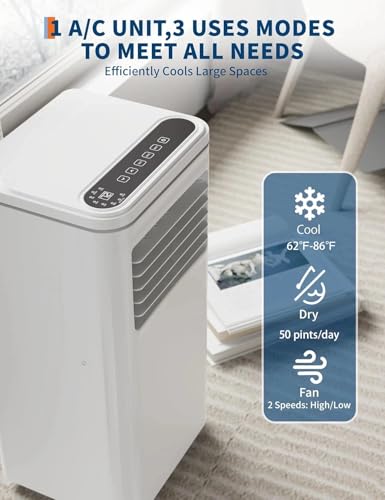
Garvee 8,000 BTU 3-in-1 Portable AC

The Garvee 8,000 BTU Portable Air Conditioner is built for rooms up to about 350 sq. ft. It blends three modes: cooling, dehumidifying, and fan-only. The unit arrives with a window kit and a remote. Setup is simple, and the controls are easy to learn.
In use, the Garvee moves cool air quickly across small spaces. The sleep mode helps keep noise low at night. It handles dehumidifying well on humid days. The compact size makes it easy to roll from room to room.
Pros:
- Fast cooling for small to mid rooms
- 3-in-1 modes: cool, dehumidify, and fan
- Includes window kit for quick setup
- Remote and timer for hands-off use
- Compact and easy to move on wheels
- Sleep mode reduces noise at night
Cons:
- Not ideal for very large rooms or open plans
- Requires a window for venting
- May need occasional draining in humid areas
My Recommendation
I recommend the Garvee Portable Air Conditioner for renters, dorm students, and small home offices. It fits rooms up to 350 sq. ft. and gives quick, reliable cooling without a permanent install. The 3-in-1 modes make it a good all-round unit for seasonal use.
| Best for | Why |
|---|---|
| Renters & dorms | No permanent install; window kit works with most windows |
| Home offices | Quiet sleep mode and remote control for comfort |
| Small living rooms | 8,000 BTU cools up to ~350 sq. ft. efficiently |
Choosing the right Portable Air Conditioner can be confusing. I break down the key points from my years of testing. I use short, clear steps you can follow. This saves time and money.
Sizing matters most. An undersized Portable Air Conditioner will run all day and still not cool well. An oversized unit cycles too fast and wastes energy. I use a simple rule: match BTU to room size. For example, 8,000 BTU suits many rooms up to 350 sq. ft. But the ideal number changes with ceiling height and sun exposure. If your room faces full sun, step up one size.
BTU and room size quick guide:
- Up to 150 sq. ft.: 5,000–6,000 BTU
- 150–250 sq. ft.: 6,000–8,000 BTU
- 250–350 sq. ft.: 8,000–10,000 BTU
- 350–450 sq. ft.: 10,000–12,000 BTU
I often see buyers pick BTU only. Don’t. Consider insulation and heat sources. If you have many windows, thin walls, or lots of electronics, add 10–20% to the BTU estimate. If you live in a shaded basement, you can step down.
Venting and placement are the second big choice. A Portable Air Conditioner needs to vent hot air outside. Most units use a single exhaust hose and a window kit. I prefer sliding window kits because they seal easier. Place the Portable Air Conditioner near the window to avoid long exhaust hoses. The hose should be as short and straight as possible. A long bent hose reduces efficiency and adds noise.
Noise is a concern for many. Portable Air Conditioner motors and fans create sound. I measure noise in dB. A good unit runs near 50 dB at normal mode. Some quiet models drop below 45 dB in sleep mode. I always test units at night. If you work from home, pick a model with a low noise rating and a sleep mode. Fan-only mode is often much quieter than full cooling.
Energy use can surprise buyers. Portable Air Conditioners are less efficient than central AC but can be cheaper than running whole-house cooling when you cool only one room. Look for energy-saving modes. Many models offer eco modes and timers. I also check the EER (Energy Efficiency Ratio) when available. A higher EER means better efficiency. Use the unit only in occupied rooms to save power.
Dehumidifying is a huge bonus. I live in a humid climate. A Portable Air Conditioner that both cools and dehumidifies reduces stickiness and helps your AC feel stronger. Many units have a dedicated dehumidify mode and an internal water tank. Some units use auto-evaporation to avoid frequent draining. If you live in very humid areas, a unit with a continuous drain option saves time. I always empty tanks before going to bed to avoid leaks.
Installation tips that I always follow:
- Read the window kit instructions fully.
- Measure your window before buying.
- Seal gaps with foam or magnetic strips to keep warm air out.
- Keep the exhaust hose as short and straight as possible.
- Place the unit on a level surface to avoid water overflow.
Airflow and circulation are as important as BTU. Don’t point the Portable Air Conditioner at a corner. Aim the airflow into the room center. I use a small oscillating fan to move cooled air into doorways. This helps cool adjacent rooms without extra units.
Maintenance is easy but essential. Clean filters every 2-4 weeks during heavy use. A dirty filter reduces airflow and lowers efficiency. I rinse reusable filters under warm water and let them dry fully. Replace disposable filters as recommended. Check the exhaust hose for lint and dust. In winter, I drain the tank and store the unit in a dry place.
Portability is more than wheels. I check handles, weight, and the physical footprint. Units with sturdy casters and molded handles move smoothly. If you plan to shift your Portable Air Conditioner between floors, check the weight and whether you need two people for safe handling.
Comparing Portable Air Conditioner vs window AC units:
- Installation: Portable Air Conditioner needs a vent hose and window kit. Window AC installs in the window frame. Both can be DIY.
- Noise: Window ACs often run quieter because part of the unit sits outside. Portable Air Conditioners put all components inside.
- Cost: Portable Air Conditioners may cost slightly more for the same BTU. Window units can be more efficient.
- Flexibility: Portable Air Conditioners are movable. Window ACs are fixed.
I recommend a Portable Air Conditioner if you need flexibility. I choose a window AC if noise and efficiency are top priorities and you have a compatible window.
Smart features and controls matter. Modern Portable Air Conditioner models offer remote control, digital displays, and timers. Some connect to Wi-Fi and work with voice assistants. I value the timer most. It lets me cool before I arrive home. A sleep mode reduces fan speed and raises set temperature slightly to save energy.
Safety tips I always follow:
- Never block the exhaust or intake vents.
- Use grounded outlets; avoid extension cords.
- Keep the unit clear of curtains and flammable material.
- Empty the water tray regularly to prevent mold.
Storage tips for off-season:
- Clean and dry the unit fully.
- Remove and clean the filters.
- Coil the exhaust hose loosely and store it inside the box if possible.
- Store in a dry, cool spot to prevent mold.
Troubleshooting common issues:
- Weak cooling: Check the exhaust hose and window seal. Clean filters. Ensure doorways are closed.
- Excess water in tank: Check drain plug or hose. If humidity is high, continuous drain is best.
- High noise: Tighten panels and check for loose screws. Move the unit to a more stable floor.
I keep a small maintenance kit with a soft brush, mild soap, and a spare hose clamp.
Buying tips I use:
- Read user reviews for real-life noise and durability reports.
- Check warranty length and what it covers.
- Compare BTU, EER, and features for value.
- Look for models with a continuous drain and auto-evap if you live in a humid area.
- Measure your window and room before you buy.
How I test a Portable Air Conditioner in my lab:
- I measure cooling time in a closed room of known size.
- I note the decibel level at 3 feet and 6 feet.
- I log power draw with a meter.
- I run a 24-hour humidity test in high-humidity conditions.
- I assess ease of install and the completeness of the window kit.
I repeat tests across models to compare real-world performance.
Real-world use cases where a Portable Air Conditioner shines:
- Apartments with strict lease rules.
- Dorm rooms where plug-and-play is needed.
- Home offices where targeted cooling is cheaper than whole-house AC.
- Small workshops and garages that need temporary cooling.
- RVs and tiny homes when a compact unit fits.
Common myths I debunk:
- Myth: All Portable Air Conditioners overheat rooms. Fact: If sized properly and vented, they cool fine.
- Myth: Portable Air Conditioners waste more energy than window ACs always. Fact: They can be cheaper if you cool just one room.
- Myth: Portable Air Conditioners cause condensation damage. Fact: Proper venting and draining prevent leaks.
Accessories I recommend:
- Extra foam seals for gaps in older windows.
- A small oscillating fan to move air.
- A drain hose for continuous drain use.
- A surge protector with a high rating.
- A mat to protect floors from drips.
I also test long-term reliability. The best Portable Air Conditioner lasts multiple seasons when maintained. I rate durability by motor sound stability and compressor longevity. Look for units with good parts availability and a clear warranty.
Environmental notes I tell buyers: refrigerants have improved. Newer Portable Air Conditioners use low-GWP refrigerants. They help reduce environmental impact. Still, any cooling uses electricity. Use smart scheduling to lower your footprint.
Price vs performance: don’t chase a low price alone. A cheap Portable Air Conditioner can cost more in the long run through repairs and poor efficiency. I balance initial cost with EER, features, and warranty. Often, a mid-range model gives the best value.
Packing for summer travel: If you move between homes or rent seasonal space, a Portable Air Conditioner is ideal. It travels well when you pack the hose and window kit carefully. Choose a model with simple setup to save time.
What I learned about brands and support: Customer support matters. A quick warranty claim and easy access to parts save headaches. I choose brands with clear support lines and long warranty terms.
How to keep your Portable Air Conditioner running well all season:
- Clean filters every 2-4 weeks.
- Use the timer to avoid overuse.
- Keep curtains closed on sunny days.
- Use fans to spread cool air.
- Monitor the drain and empty as needed.
If you have allergies: A Portable Air Conditioner with a HEPA or fine filter helps reduce dust and pollen. Some units include washable filters that help with pet hair. Always check the filter type if allergies matter.
If you live in an older home: Windows can be tricky. Measure carefully. Use an adjustable window kit if your window is non-standard. Seal gaps well to prevent hot air from entering. I also recommend checking the sill for level so the exhaust drains correctly.
Portable Air Conditioner lifespan expectations: With regular care, many units last 4–7 years. Compressor failure is the most common long-term issue. Keep the unit clean and avoid running it non-stop on max to extend life.
When to replace a Portable Air Conditioner:
- Cooling efficiency drops noticeably.
- Compressor cycles erratically.
- Repairs cost more than a new unit.
- Noise increases significantly.
I tend to replace rather than repair major compressor faults.
DIY fixes I trust:
- Tightening loose panels to reduce noise.
- Flushing the drain line to clear clogs.
- Replacing a torn foam seal in the window kit.
For anything involving the compressor or refrigerant, call a pro.
I always answer reader questions one-on-one. If you want a pick for a certain room size, tell me the square footage and sun exposure. I will give a tailored Portable Air Conditioner suggestion.
Now that you understand the factors, you can shop with confidence. I combine hands-on testing and real-life use to give practical advice. My goal is to help you find the right Portable Air Conditioner quickly.
FAQs Of Portable Air Conditioner
How do I size a Portable Air Conditioner for my room?
I measure the room in square feet and match BTU. Use 8,000 BTU for about 250–350 sq. ft. Add 10–20% if the room is sunny or has high ceilings.
Do Portable Air Conditioners need venting?
Yes. They need a hose to vent hot air outside. Most units come with a window kit for easy venting.
How noisy are Portable Air Conditioners?
Noise varies. Good models run around 45–55 dB. Use sleep mode at night for lower sound.
Do Portable Air Conditioners remove humidity?
Yes. Most have a dehumidify mode. They collect water in a tank or offer a continuous drain.
Can I use a Portable Air Conditioner in an RV?
Yes, if you have space and a window or vent to exhaust. Check power limits and size carefully.
Final Verdict: Which Should You Buy?
The Garvee 8,000 BTU Portable Air Conditioner is my top pick for renters and small rooms. It balances cooling power, portability, and useful features like dehumidify and sleep mode.
If you need a Portable Air Conditioner that moves with you and cools efficiently up to 350 sq. ft., this model offers good value and easy setup.