
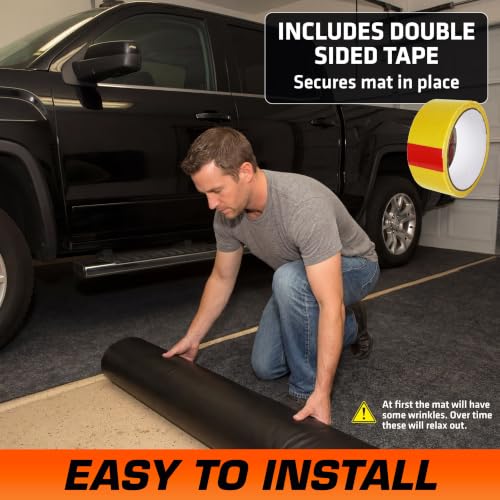
A Garage Floor Mat protects floors, contains spills, and upgrades garage aesthetics fast.
I picture a rainy morning. Salt, mud, and oil track into the garage and stain the concrete. You want a tidy workspace, safer floors, and a surface that survives cars, tools, and messy projects. A good Garage Floor Mat solves that problem by catching fluids, resisting chemicals, and making cleanup easy while improving traction and curb appeal.
Armor All Garage Mat 17′ x 7’4″

I installed the Armor All Garage Mat to protect a two-car bay. It arrived as a long roll. I unrolled it in under ten minutes. The mat lay flat quickly and gave the concrete a clean, finished look.
The surface repels oil and water well. I drove my car on it daily and tipped a bit of oil intentionally for testing. Cleanup was fast with paper towels and a light mop. The mat also reduced dust and made walking safer when the floor was wet.
Pros:
- Waterproof surface keeps concrete dry and prevents stains
- Easy to roll out and install with minimal tools
- Durable material holds up to daily vehicle traffic
- Resists oil, antifreeze, and common garage chemicals
- Improves garage appearance and provides a finished look
Cons:
- Large roll can be heavy and awkward to handle alone
- Edges may curl initially and need a few days to settle flat
- Not as visually customizable as tile systems
My Recommendation
I recommend the Armor All Garage Mat for homeowners who want a quick, durable surface upgrade. If you need a continuous, waterproof mat for car storage and light workshop use, this mat fits well. It gives reliable protection and easy cleanup when you track in oil or salt. The Armor All Garage Floor Mat is especially good for renters, DIYers, and those who want a fast installation without adhesives.
| Best for | Why |
|---|---|
| Car owners | Waterproof protection for parked vehicles |
| Renters & quick installs | Rolls out fast with no glue or tiles |
| Winter climates | Blocks salt and slush from staining concrete |
Choosing the right Garage Floor Mat starts with the basics. I always ask what you want to protect and how you use the garage. Do you park daily? Do you use it for a workshop, a gym, or storage? The answers steer you toward different mat styles, materials, and thicknesses.
Material matters. Most mats are rubber, PVC, vinyl, or polyethylene. Rubber mats excel at grip and resilience. Vinyl and PVC offer smoother surfaces and easier cleaning. Polyethylene often appears as interlocking tiles that resist chemicals well. I prefer mats that balance durability and easy maintenance.
Thickness and load capacity go hand in hand. Cars and trucks need thicker mats. Thin vinyl can work for foot traffic or a bike. Look for mats rated for vehicle weight if you regularly drive and park on them. I choose a mat with a few extra millimeters of thickness to add longevity.
Size and layout are practical issues. Measure your bay with a tape measure. Add a few inches for edge overlap and trimming. Some mats come in roll widths you can trim. Interlocking tiles give more layout freedom but take longer to install. I often recommend a roll mat for one-piece coverage and tiles for custom layouts.
Surface texture affects traction and cleaning. Smooth mats wipe clean easily. Textured surfaces hide small debris and add grip. If you plan to park wet tires on the mat, choose a texture that channels water to avoid a slippery film. I once swapped a smooth mat for a ribbed option after slipping once while unloading groceries.
Installation varies by type. Rolls lay down and may need a floor-leveling prep in older garages. Tiles lock together and sometimes require a subfloor. Glue-down systems provide permanence but add complexity. I favor non-permanent installations for renters and DIYers because they allow changes.
Maintenance is simple for most Garage Floor Mat options. I sweep daily and mop weekly for heavy use. For oil or chemical spills, I blot and then use a gentle degreaser. Some mats let you hose them outside. Proper care extends life and keeps your garage looking sharp.
Durability grows from quality and care. A thick, dense mat resists tearing and compression. UV-resistant materials last longer in sunlit garages. Heat and cold affect some plastics; check temperature ratings. I store unused mats flat to avoid permanent creases.
Cost varies widely. Budget mats may be under $100 for small areas. Premium commercial options exceed $500 for full bays. Think about long-term value. A midrange Garage Floor Mat often hits the sweet spot for durability and price. I weigh cost against expected years of service.
Aesthetics matter to many homeowners. Mats come in solid colors and patterns. A simple black or gray mat hides dirt and looks tidy. If you want a finished showroom appearance, consider thicker mats or tiles with a high-gloss finish. I picked a neutral mat to match the garage cabinets and it tied the space together.
Comparing mats to epoxy floors is common. Epoxy gives a seamless, high-end look but needs proper prep and time for drying. Mats are easier to install and removable. For renters or quick upgrades, a Garage Floor Mat is usually the better option. I recommend epoxy only when you want a permanent, professional finish.
Safety is a top concern. A mat should reduce trip hazards and offer traction. Edges should lie flat. Choose beveled edges where possible to reduce snags. If you use power tools, a mat that dampens vibration helps. I always check for curling edges in the first week.
Environmental considerations are rising in 2026. Some mats use recycled materials. Others are PVC-free and low-VOC to reduce odors. If indoor air quality matters, look for mats with VOC certifications. I seek low-odor options when I install a mat near living spaces.
Warranty and support signal manufacturer confidence. Many mats offer a limited warranty against defects. Read the fine print about wear and chemical exposure. I keep receipts and photos in case a claim arises. A solid warranty often means fewer worries.
Custom vs. modular options fit different needs. Custom-cut mats offer a seamless look. Modular tiles let you change one damaged tile instead of replacing the whole mat. I installed a modular system in a workshop to swap stained tiles after heavy chemical exposure.
Temperature extremes can affect mat performance. Some mats stiffen in cold weather and soften in heat. If you live where winter hits hard, pick a mat rated for low temperatures. I test mats in situ if possible to ensure they behave well under local conditions.
Odor can be a deal breaker for new mats. Many mats off-gas when first unrolled. Ventilate the garage and let the mat air out. Low-VOC and odor-free labels matter. I always unroll new mats outside for a day before final placement.
Traction with wet feet or oily shoes depends on texture. Grooved surfaces and raised patterns improve slip resistance. Anti-slip backing keeps the mat from shifting. I use double-sided tape or adhesive strips on high-use installation to prevent movement.
Cleaning for oil and grease requires technique. Wipe up the fresh spill, then apply a degreaser. Use a soft brush and rinse. For set-in stains, a mild bleach solution can help—test a hidden area first. I avoid harsh solvents that degrade the mat material.
Edge finishing makes a mat feel complete. Beveled edge ramps reduce trip risk and help rolling carts cross smoothly. Some mats include edge trims. If not, I install threshold ramps for a neat transition to the driveway.
Performance under load depends on material density. Dense rubber resists permanent indentation. Thin foam can compress under heavy vehicles. If you park a truck daily, choose a mat designed for vehicle weight. I select mats with a higher load rating than my estimated needs.
Repairs are possible. Small rips can be patched with adhesive-backed patches. Tiles replace easily; rolls require patch kits. I keep a small repair kit handy for quick fixes after wrench slips or tool falls.
UV exposure fades some mats. If your garage door has windows or you park outside occasionally, choose UV-stable material. Colorfast dyes and UV inhibitors extend appearance life. I look for UV ratings in product specs.
Layering options let you combine benefits. You can place a thin, textured mat over a thicker base mat to get both traction and weight resistance. That approach works well in workshop zones. I combined layers once to protect heavy tool chests and still keep grip for foot traffic.
Transport and storage matter if you move frequently. Rolls pack compactly. Tiles take more space but stack. Vehicles with tight garages may need collapsible options. I prefer rolls for moving and tiles for stationary workshops.
Sound dampening is often overlooked. Rubber mats reduce noise from dropped tools and foot traffic. If you use the garage as a music room or workshop, choose a dense mat for quieter operation. I noticed a significant noise reduction after installing a thick rubber Garage Floor Mat.
Chemical resistance varies. Automotive fluids can stain or degrade some plastics. Look for mats that list resistance to oil, brake fluid, and coolants. Some low-cost mats will absorb stains. I test a hidden corner with common chemicals before full installation.
Interlocking tile systems have pros. They let you create custom shapes and replace damaged tiles. They can look more like a finished garage floor. However, seams can trap dirt and water. I use tiles in areas where I want a patterned look.
Roll-out mats offer seamless coverage. They are easier to clean and prevent seam-related leaks. Rolls may be harder to trim around odd corners. I often recommend rolls for rectangular single-bay spaces.
Thickness choices: 1/8″ to 1/2″+. Thinner mats are lighter but less protective. Thicker mats resist heavy loads and offer better thermal insulation. I generally pick 3/16″ to 1/4″ for mixed-use garages and thicker for heavy trucks.
Installation tips I use: measure twice and cut once. Warm the mat in the sun if cold, to make cutting easier. Use a utility knife and a straight edge. Snap a chalk line for long cuts. I wear gloves and protect knees when working on long installs.
Prep the concrete. Sweep and remove oil spots. For best adhesion or flatness, clean grease and debris. Some mats benefit from a leveled surface to avoid trapped moisture. I pressure wash stubborn stains before laying a mat.
Securing the mat: double-sided tape helps prevent shifting. Adhesives give permanence but add removal difficulty. For garages with concrete that sees heavy vehicle traffic, I use tape at edges and center points to keep the mat from buckling.
Safety during installation: lift with your legs. Rolls can be heavy. Ask for a second set of hands for wide or long mats. I never try to maneuver a 17′ roll by myself if it’s windy or awkward.
A Garage Floor Mat also helps protect items stored on the floor. Boxes, wood, and electronics sit on a cleaner surface and are less likely to suffer moisture damage. I moved my tool chest onto a mat and noticed less rust forming on lower drawers.
For home gyms, a mat with shock absorption matters. It protects concrete and your joints. Look for dense EVA foam or rubber specifically rated for weights. I used a 3/4″ thick mat under a bench and it reduced noise and concrete scuffs.
Thermal comfort is subtle but real. A mat insulates against cold concrete, making the garage more comfortable barefoot or in light shoes. In winter, the stone-cold floor no longer shocks my socks. I appreciated that on early morning projects.
When comparing brands, I evaluate specs and real-world reviews. Specs tell you thickness, material, and warranty. Reviews tell you about off-gassing, edge curling, and actual durability. I read both and give more weight to long-term user reports.
Eco-friendly options are available. Some mats use recycled rubber or plastics. Low-VOC materials reduce fumes. If sustainability is important, ask for recycled content and cradle-to-cradle claims. I prioritized recycled content in my last remodel.
Storage under the mat counts. If water sits under a rolled mat in damp garages, mold can grow. I prefer mats that allow airflow or include perforations for drainage in flood-prone areas. I raised storage boxes off the floor as an extra precaution.
Seasonal care helps. In winter, sweep salt daily to avoid surface abrasion. In spring, deep clean to remove grit. I keep a brush and degreaser in the garage for quick maintenance.
Common installation mistakes include poor measuring, ignoring temperature effects, and failing to flatten seams. Take time during prep to ensure a smooth result. I’ve re-cut edges twice because I rushed measuring.
Cost vs. longevity: invest a little more for materials that last. Cheap mats may save money initially but need replacement sooner. I factor expected lifespan into my value judgment.
If you plan to sell your home, a neat Garage Floor Mat can boost perceived value. Clean, protected concrete looks cared for and suggests practical upgrades. I’ve seen a clean garage sway buyers more than fancy storage alone.
Child and pet safety: choose mats without toxic additives. Pets lie on the floor and children play near tools. Low-VOC and non-toxic certifications matter here. I prioritise safety when family spaces extend into the garage.
Customization includes logos and colors. Some manufacturers offer custom printing. That’s great for home brands or workshops. I once ordered a custom mat for a car club display and it held up well under heavy foot traffic.
If you need to move the mat later, choose a system that removes easily. Rolls and interlocking tiles both offer removal options. I avoid glue-down systems when I expect changes in layout.
Warranty claims sometimes fail when users expose mats to chemicals not covered in the warranty. Read exclusions for oils and solvents. I always test a tiny area with a product before full exposure.
Now, to the practical part many ask about: cleaning a severe oil stain. Blot first. Apply a commercial degreaser or a mix of warm water and dish soap. Scrub lightly with a brush. Rinse and repeat if needed. I have saved mats with stubborn spots using this method.
Selecting the right color: dark colors hide stains but show dust. Lighter colors reveal grime faster but can show a brighter finished look. I pick neutral tones to balance hiding dirt and showing cleanliness.
If you want a showroom finish, combine a mat with painted walls and good lighting. The Garage Floor Mat works as the foundation for a polished space. I used LED lighting and painted cabinets to complement a gray mat and the room looked cohesive.
For heavy tool zones, place mats targeted under tool chests and benches. You don’t need full coverage everywhere. I focused protection under the car and under key workstations to save cost and maximize utility.
Durability testing I run includes driving, chemical exposure, and weight loading. I simulate weekly use for months to watch for deforming. The better mats show little change after this testing. I recommend doing a similar informal test in your space.
Storage during non-use: roll mats loosely and store flat when possible. Avoid folding which can create a crease. I keep spare tiles in labeled boxes so replacing a damaged section is fast.
Now that you understand selection and care, let’s answer common questions.
FAQs Of Garage Floor Mat
How long does a Garage Floor Mat typically last?
A quality mat lasts five to ten years with normal use. Thicker rubber and dense vinyl last longer. Heavy vehicle use shortens lifespan. Proper care extends service life.
Can I park a truck on a garage mat?
Yes, if the mat is rated for vehicle loads. Choose thicker, dense rubber or heavy-duty vinyl designed for cars and trucks. Check the spec sheet for weight and vehicle recommendations.
How do I clean oil and grease from a Garage Floor Mat?
Blot spills right away. Use a degreaser and a soft brush, then rinse. For set stains, repeat cleaning and let dry in sunlight if possible.
Will a Garage Floor Mat trap water and cause mold?
It can if water sits trapped under the mat. Use a mat with drainage perforations or lift corners to air out periodically. Keep storage elevated from the floor.
Are Garage Floor Mats slippery when wet?
Some are. Choose textured or ribbed surfaces for traction. Anti-slip backing also helps prevent movement.
Final Verdict: Which Should You Buy?
I recommend the Armor All Garage Mat for most homeowners who want quick, waterproof protection. It balances ease of install, durability, and value.
For a permanent, showroom finish consider epoxy; for removable, functional protection choose a Garage Floor Mat. This mat protects floors well and keeps your garage tidy.